

My job at this organization was to bring in leads. Qualified ones. People who would read something we made, trust us a little more, and eventually book a demo.
Everything else I did in those two years, from the blogs and the website to the videos and the newsletter, served that one goal. I think it’s worth saying up front, because it’s easy to look at a traffic chart and assume the traffic was the point. It wasn’t. It was the doorway.
Who I was writing for
The organization works in IBM i, a platform that runs payroll, inventory and orders for manufacturers, distributors and insurers for decades. The people who look after it are experienced, busy, and deeply unimpressed by buzzwords. They’ve heard every “transformation” pitch going.
So the question was “what would make someone like that stop scrolling, and then take the next step?”
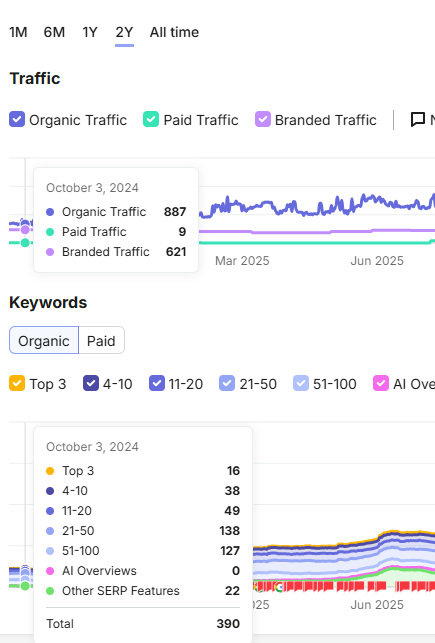
Where things stood in September 2024
Organic search was bringing in roughly 900 visits a month, and the company ranked for about 350 keywords (Semrush estimates). Branded traffic was flat, and it stayed flat. People who already knew this brand could find it. Most other people couldn’t. That meant the whole lead engine had a small front door.
What I built
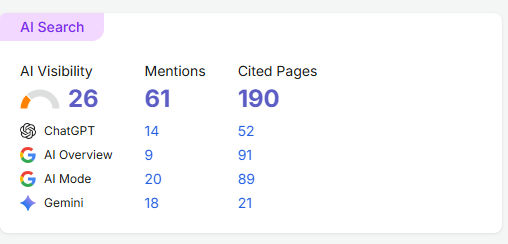
Blogs built for AI search, not just Google. I structured every blog so AI tools could find, understand and quote it. That meant question-based headings that match how people actually search. It meant a direct answer in the first two or three sentences under each heading, before any background. I added structured FAQ sections with FAQ schema, and wrote clear one-line definitions of key terms that AI could lift as-is. Comparisons and steps went into short lists and tables instead of long paragraphs. Related posts were linked together into topic clusters, so the site showed real depth on each subject. It paid off: by 2026, the organization was appearing in Google’s AI Overviews for a few hundred searches, up from none when I started.
The path from reader to lead. Working directly with our demand gen manager off campaign briefs, I built full-funnel assets (whitepapers, eBooks, checklists, blogs, solution briefs, webinars) along with the landing pages behind the gated ones. Each was wired with HubSpot CTAs and UTM tracking so a download could be traced back to where it came from. Our gated landing pages converted at around 12%.
Proof, because this audience wants proof. I pulled the company’s strongest customer stories from across industries into one compilation. It became one of our most useful assets, with 350 downloads, and sales used it in live deals. I also built a video customer story from scratch: I wrote the interview questions, interviewed the customer in our office, ran the recording, and we used the finished video as a lead magnet.
A newsletter people actually opened. I built it directly in HubSpot. It averaged a 12% open rate and a 6.9% click-through rate, well above what most B2B tech newsletters see.
Around all of that, I scripted product videos, ran the organization’s brand social channels, and went through 40 existing blog posts one by one, asking who each was for and what the reader should do next.
What changed
Over my two years, content helped source around 520 marketing-qualified leads and influenced 95 demo requests.
The front door got bigger too. By Semrush’s estimates, organic traffic more than doubled, from about 900 visits a month to around 7000 by September 2026. The number of keywords the company ranked for grew from about 350 to about 3,000. By 2026, the brand was also appearing in Google’s AI Overviews for a few hundred searches, which it hadn’t done at all when I started.
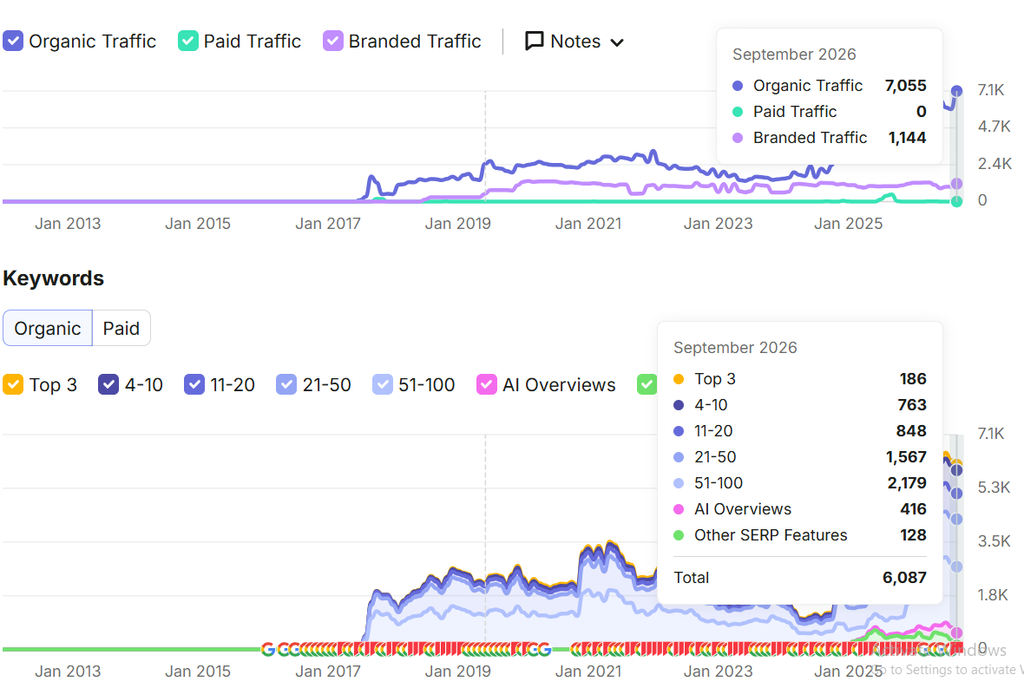
To be honest about the chart: in my last few months, traffic dipped from its highs even though rankings held. Fewer people were clicking through from search, a pattern lots of sites are seeing as AI answers take over.
What I’d do differently
I’d ask for the dashboard on day one. The lead numbers above came from our demand gen team, not from a view I had myself. I could see downloads and traffic, but not the full line from an asset to a closed deal. Next time, before I write anything, I’ll agree with whoever owns the CRM on how we’ll trace content to pipeline, and I’ll check that view every month.
I’d measure AI visibility properly from the start. I structured our content for AI search, and Google’s AI Overviews picked it up. But I was mostly tracking Google. I didn’t have a clear view of whether ChatGPT, Perplexity or Gemini were citing us, or whether those mentions led to visits and leads. Next time, I’d set up AI citation tracking alongside traffic reporting on day one, so I could see which pieces the AI tools trusted and do more of what worked.
I’d run original research. IBM i teams know things nobody else knows. A simple annual survey of that audience would have been content competitors couldn’t copy, and exactly the kind of thing that fills a pipeline.


Leave a Reply